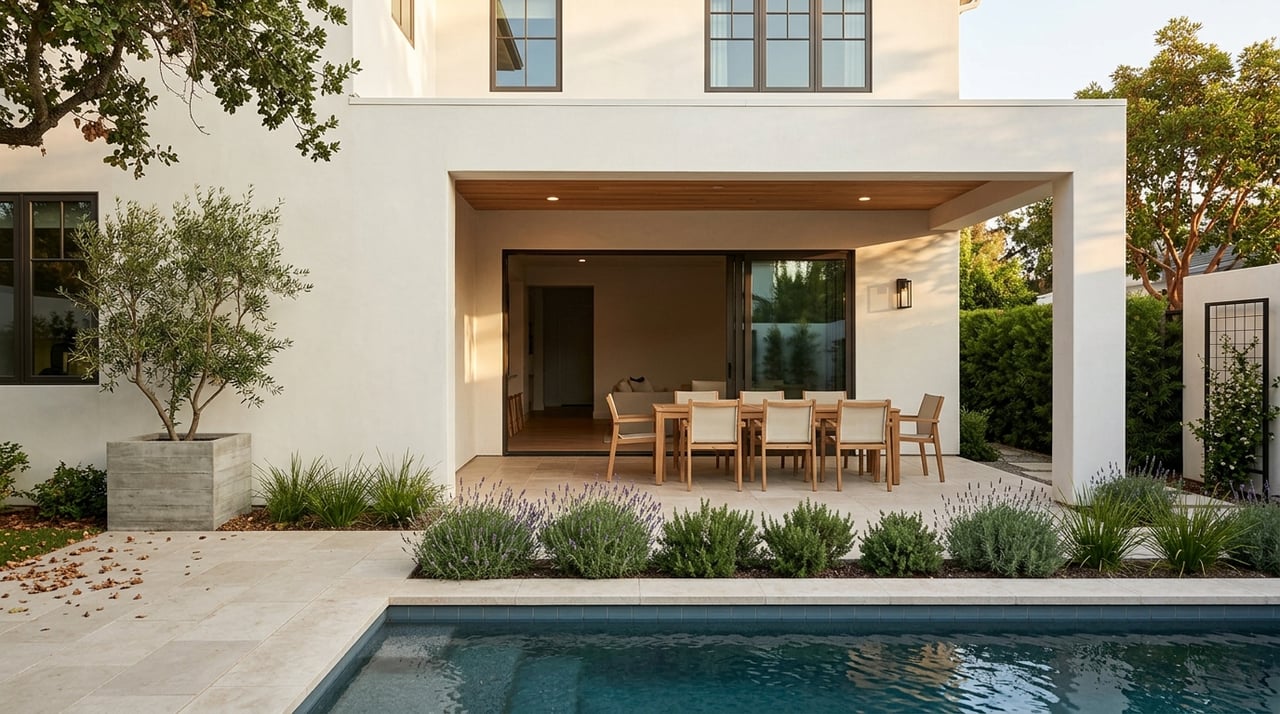
Understanding Menlo Park Micro-Markets For Move-Up Buyers
July 9, 2026
Wondering why one Menlo Park home search feels wildly different from another, even when the addresses are only a few minutes apart? If you are a move-up buyer, that difference matters more than ever. Understanding Menlo Park as a set of micro-markets can help you target the right fit, move faster when the right home appears, and avoid comparing homes that really belong in different markets. Let’s dive in.
Menlo Park’s own neighborhood analysis breaks the city into 16 neighborhoods and notes that those boundaries are for reference and informational purposes only. That is a useful starting point for buyers because it confirms what many house hunters quickly feel on the ground: Menlo Park does not behave like one uniform housing market.
The city describes Menlo Park as a 19-square-mile community with about 32,000 residents, active commercial districts, and proximity to major institutions and employers including Stanford University, Menlo College, Meta, Snowflake, SRI International, Pacific Biosciences, Exponent, Grail, and CSBio. In practical terms, that means commute patterns, access to Caltrain, proximity to commercial areas, and neighborhood housing mix can shape demand just as much as home size.
For move-up buyers, this matters because your next purchase is usually not just about getting more space. It is about finding the right balance of location, property type, daily convenience, and long-term value within a very competitive city.
A helpful way to think about Menlo Park is through four overlapping search lenses. These are not hard rules, but they are a smart framework for narrowing your options.
This cluster includes Downtown, Central Menlo, Allied Arts, and the El Camino Real Corridor. The city describes Downtown as mostly apartments with commercial and retail uses, Central Menlo as primarily two- and three-story apartments, Allied Arts and Stanford Park as a mix of detached single-family homes and two-story apartments, and the El Camino Real Corridor as a concentration of retailers, neighborhood commercial uses, and professional office services.
This part of Menlo Park tends to appeal to buyers who value convenience, dining, events, and transit access. Downtown includes restaurants, shopping, a Sunday farmers market, year-round events, and a new public plaza project. Central Menlo sits near the Menlo Park Caltrain station, which can be a major advantage if your move-up plan includes keeping a regular Peninsula or San Francisco commute.
For a move-up buyer, this area often becomes a tradeoff conversation. You may gain walkability and transit access, but depending on the property, you may be comparing attached housing, mixed-use surroundings, or smaller lots against larger detached-home options elsewhere.
This cluster includes The Willows, South of Seminary–Vintage Oaks, Felton Gables, Linfield Oaks, and Park Forest–Spruce–San Antonio. These neighborhoods generally offer more of the detached-home feel that many move-up buyers want when they are stepping out of a condo, townhouse, or smaller first home.
The city describes The Willows as primarily detached single-family homes with commercial strips along Willow Road, Middlefield Road, and Menalto Avenue. South of Seminary–Vintage Oaks is also mostly detached homes, with transit along Willow and Middlefield. Felton Gables is entirely detached single-family homes, while Linfield Oaks mixes residential uses with retail and public facilities, including adjacency to Burgess Park.
This cluster can feel more aligned with classic move-up priorities like extra bedrooms, more yard space, and a more traditional single-family layout. But these neighborhoods are not interchangeable, and that is where micro-market analysis becomes especially important.
Sharon Heights and Stanford Hills form another distinct lens. The city describes Sharon Heights as a mix of detached single-family homes and medium-density apartments, along with offices, a country club, a local park, neighborhood commercial uses, and schools. It also notes that most households are more than a half-mile from the neighborhood grocery store and that transit is limited.
Stanford Hills is described as almost entirely detached single-family homes, with Stanford Hills Park and no transit stops within the tract. Access is concentrated via Branner Drive to Sand Hill Road, which creates a different feel from the more central and transit-oriented parts of town.
For move-up buyers, these neighborhoods often read more like a privacy, access, and larger-home market than a walkable village market. If you are prioritizing home size, setting, or separation from busier commercial corridors, this lens may deserve close attention.
Bayfront, Belle Haven, and the VA Medical District make up another very different part of Menlo Park. Bayfront is dominated by high-density apartments, office, industrial, and research uses, along with some neighborhood retail and Bedwell Bayfront Park, which spans 160 acres. Belle Haven is mostly detached single-family homes with a few low-rise apartments, three local parks, and two small grocery stores on its eastern side.
For move-up buyers, these areas may show a very different pricing profile from west-side neighborhoods. They can also come with different location factors tied to employer access, housing mix, and environmental considerations. That is exactly why citywide averages can be misleading if you do not break the market down further.
Over the three months ending May 2026, Menlo Park as a whole remained highly competitive. Homes sold in about 13 days, with about four offers on average, a median sale price of $3,290,531, and a 104.1% sale-to-list ratio.
That headline number is useful, but it is only the first layer. Recent neighborhood medians varied sharply, from $1,364,541 in Belle Haven to $2,654,107 in Central Menlo, $2.8 million in Downtown Menlo Park, $3,648,773 in The Willows, and $5,798,050 in Allied Arts.
That spread is the clearest proof that move-up buyers should avoid thinking in broad city terms alone. A home search in Belle Haven is not the same market as a home search in Allied Arts, even though both sit within Menlo Park.
Price is only part of the story. Competition can stay intense even in lower-priced pockets.
The Willows posted a median 10 days on market and a 109.2% sale-to-list ratio. Belle Haven also posted 10 median days on market and a 104.1% sale-to-list ratio. Central Menlo posted 14 days on market with homes selling about 4% above list on average.
For you as a move-up buyer, this means lower median price does not automatically mean easier negotiation. In some micro-markets, buyer demand stays strong because the neighborhood fills a very specific need, whether that is a detached home, commute access, or relative value within Menlo Park.
The Willows deserves especially careful analysis because the city splits it into east and west sections for neighborhood review. About 75% of the west side and 15% of the east side are in flood hazard areas, and the east side has a much higher Pollution Burden score than the west side.
That makes The Willows a true micro-market inside a micro-market. If you are comparing two homes both labeled “The Willows,” the surrounding conditions may still differ in meaningful ways. A strong buying strategy here means looking beyond the neighborhood name and studying the exact location.
Central Menlo and Downtown can look similar at a glance because both connect to a more urban, convenience-driven lifestyle. But their housing mix and buyer appeal can differ depending on whether you are prioritizing transit, walkability, or a specific home type.
If your move-up plan includes keeping a lower-maintenance lifestyle while gaining better location or more interior space, these neighborhoods may be part of the conversation. If your priority is a detached home with more separation from commercial activity, they may serve better as comparison points than final targets.
Allied Arts stands out because of its mix of detached homes and apartments plus its high recent median sale price. At $5,798,050, it sits well above several other Menlo Park submarkets.
That does not make it better or worse. It simply means your budget, expected home style, and negotiation approach may need to shift if this neighborhood is on your list. A move-up plan that works in Central Menlo may not transfer cleanly to Allied Arts.
Recent sold homes in Sharon Heights ranged from about $1.195 million to $13.1 million. That is a wide spread, and it highlights how much property type, lot size, and condition can affect value within a single neighborhood label.
For move-up buyers, this is a reminder to compare like with like. A neighborhood average will not tell you enough if the local inventory includes very different housing types and price bands.
One of the biggest mistakes move-up buyers make is reacting too strongly to one month of sales data. In several Menlo Park neighborhoods, the number of recent sales can be very small. One Redfin snapshot showed four homes sold in Belle Haven, eight in Central Menlo, eight in Allied Arts, and 14 in The Willows.
With that kind of volume, one unusually large or unusually modest sale can distort the median. A better approach is to study a three- to six-month pattern within the same micro-market and weigh median price, sale-to-list ratio, and days on market together.
That gives you a more grounded picture of how fast homes are moving, how aggressively buyers are bidding, and whether a list price is likely to be a true market test or only an opening number.
If you are planning a move-up purchase in Menlo Park, start by defining your search lens before you define your exact target home. Ask yourself:
Then narrow your comparison set to similar homes within the same micro-market. That keeps you from overpaying based on the wrong comp set or passing on a strong opportunity because you are comparing it to a different part of town.
In a market where homes can sell quickly and often above list, that kind of precision matters. It can shape your timing, your offer strategy, and even the order in which you tour neighborhoods.
When you are ready to map out a move-up strategy in Menlo Park, Sarah Ravella can help you break the city into the micro-markets that actually fit your goals, budget, and timeline.
Stay up to date on the latest real estate trends.


We pride ourselves in providing personalized solutions that bring our clients closer to their dream properties and enhance their long-term wealth.