San Mateo Townhome And Condo Buyer Guide
April 2, 2026
April 2, 2026
If you want a foothold on the Peninsula without stretching all the way to single-family home pricing, San Mateo condos and townhomes deserve a close look. You may be weighing monthly HOA dues, commute options, building rules, and how far your budget can really go in a competitive market. This guide will help you understand price ranges, trade-offs, and the questions that matter most before you buy in San Mateo. Let’s dive in.
For many buyers, San Mateo offers a practical middle ground on the Mid-Peninsula. You can often access a central location, easier maintenance, and useful amenities at a lower entry price than a detached home.
That said, “lower entry price” does not always mean “cheap.” According to current San Mateo condo listings, active condo inventory ranges from about $330,000 for a studio to roughly $2.9 million for a luxury condo, while townhomes range from about $929,000 to $2.345 million.
The wider county picture supports that gap. In San Mateo County, MLSListings county summaries showed common-interest homes at a median price of $984,000 in March 2025, compared with $2.05 million for single-family homes in the same period.
In today’s market, many two-bedroom condos in San Mateo cluster around roughly $630,000 to $1.1 million. Many townhomes cluster around roughly $1.1 million to $1.5 million, while newer-construction townhomes often push above $1.5 million.
You will also see meaningful differences by location, age, and layout. A downtown condo sold for $1.54 million in March 2026 with a $1,094 monthly HOA, while a Bay Meadows townhome-style condo sold for $1.43 million in March 2025 with a $376 monthly HOA, based on recent San Mateo listing examples.
That spread matters because two homes with similar square footage can feel very different financially once HOA dues, utilities, parking, and amenities are factored in. Looking at the full monthly cost usually gives you a clearer picture than list price alone.
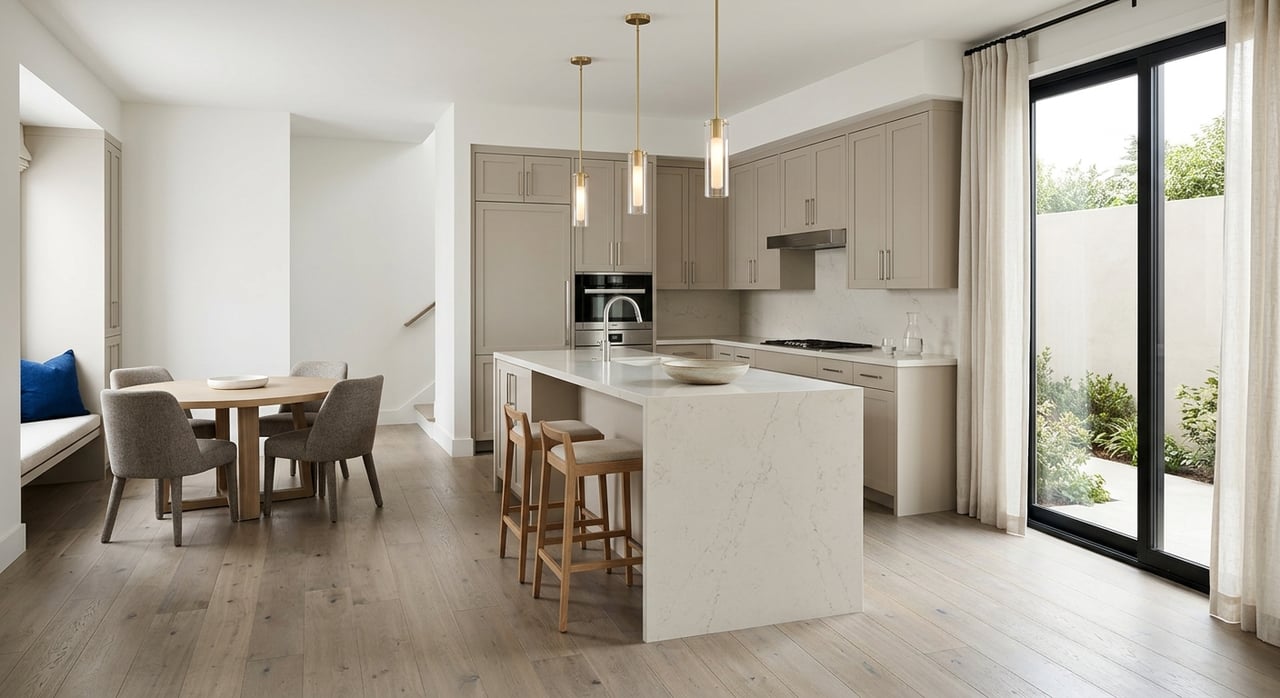
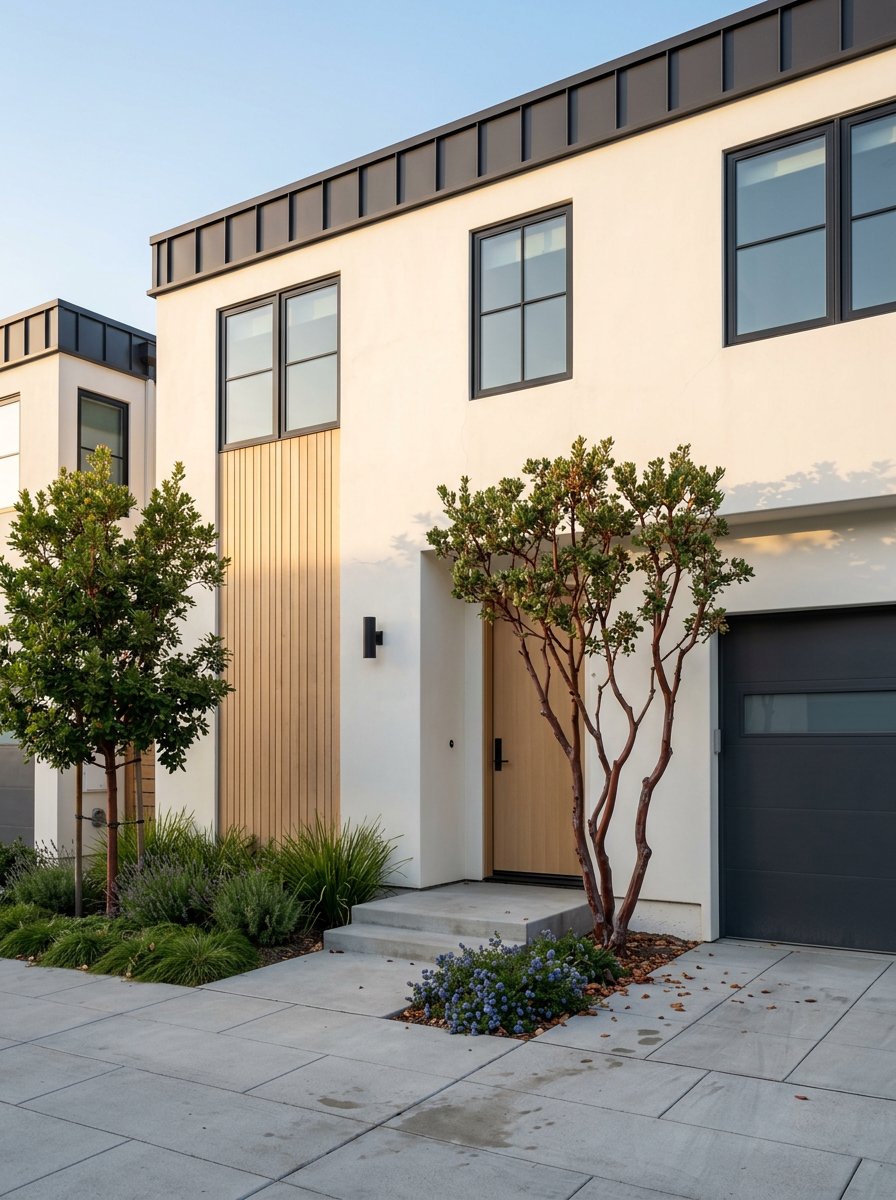
The right fit often comes down to lifestyle as much as budget. In San Mateo, you may see traditional condos in elevator buildings, townhouse-style condos with direct entry, and planned-unit-development style homes that look and live more like small single-family residences.
In simple terms, condos often offer more shared amenities and less exterior upkeep. Townhomes may offer more privacy, easier indoor-outdoor flow, and a more house-like layout, but they can also come with higher prices depending on the project and location.
Before you write an offer, make sure you understand the legal property type. Ask whether the home is a true condo, a townhouse-style condo, or a planned-unit-development style property, because ownership structure can affect HOA responsibilities, financing, insurance, and resale.
HOA dues are one of the biggest factors in San Mateo condo and townhome buying. Current and recent listings show dues ranging from the mid-$300s to more than $1,000 per month.
Examples from current and recent listings include $350 per month at a townhouse on Waters Park Drive, $376 per month in Bay Meadows, $510 per month at a Mariners Island condo, $867 per month on Admiralty Lane, and $1,094 per month for a downtown condo on 8th Avenue, according to San Mateo listing data.
That range is why you want to compare homes on an all-in monthly basis. A home with a lower purchase price but much higher HOA dues may cost as much monthly as a more expensive home with a leaner fee structure.
What is included varies widely by community. Some HOAs cover only exterior maintenance and common-area costs, while others may include water, gas, electricity, garbage, insurance, and professional management.
Amenities also vary a lot. Depending on the building or community, you might see a gym, elevator, clubroom, pool, spa, sauna, clubhouse, basketball court, playground, barbecue area, picnic area, or waterfront-style access in some older complexes.
Before moving forward, ask for clear answers on:
These details can affect both your day-to-day use of the home and your future flexibility.
One reason San Mateo stands out is convenience. If you want access to rail, bus service, shopping, dining, and major commute corridors, location inside the city can make a real difference.
San Mateo is served by Caltrain stations at San Mateo, Hayward Park, and Hillsdale. According to Caltrain’s electrified service update, the system now offers faster, more frequent service, including 15- to 20-minute peak service at 16 stations and 30-minute mid-day, evening, and weekend service.
Transit access expands beyond rail. SamTrans service information notes that Route ECR runs along El Camino Real between Daly City BART and Palo Alto Transit Center, and Route 250 connects Downtown San Mateo with the College of San Mateo.
For some buyers, being near Hillsdale, downtown, or the El Camino corridor can reduce car dependence and make daily errands easier. That is worth weighing alongside square footage and finishes.
San Mateo is not one-size-fits-all when it comes to walkability. According to Walk Score data for San Mateo, the city has a Walk Score of 68, Transit Score of 39, and Bike Score of 65.
Downtown San Mateo stands out in particular, with a Walk Score of 96. If you want a home where you can more easily reach restaurants, shops, and transit on foot, that kind of location may be especially appealing.
This is one reason townhomes and condos near downtown and major transit corridors often draw strong buyer interest. They can offer a lower-maintenance ownership option while still keeping you close to everyday conveniences.
If school assignment matters to your move, verify it by exact property address. San Mateo is served by more than one district, so it is important not to assume that one neighborhood follows a single pattern.
The San Mateo-Foster City School District says it serves about 10,500 preschool-through-8th-grade students across 21 schools in San Mateo and Foster City. The research report also notes that the San Mateo Union High School District serves about 9,000 students in grades 9 through 12 across multiple Peninsula communities.
Because boundaries and assignment rules can change, this is a due diligence item to confirm early. It is especially important when you are comparing similar homes in different parts of San Mateo.
If you are shopping across the Mid-Peninsula, San Mateo can look appealing when compared with nearby detached-home pricing. The research report notes nearby city values around $1.84 million in Redwood City, about $1.86 million in Foster City, and about $2.69 million in Burlingame on Zillow city pages, with Redfin showing Burlingame at $2.9 million median sale price in February 2026.
That comparison helps explain why many buyers focus on San Mateo condos and townhomes. You may be able to stay close to Peninsula job centers and amenities while entering the market at a lower price point than a detached home.
The trade-off is usually straightforward. You gain lower-maintenance living and sometimes strong amenity packages, but you may give up lot size, privacy, and some control that comes with single-family ownership.
As you narrow your search, keep your process focused on the issues most likely to affect long-term satisfaction:
A careful review upfront can help you avoid surprises later.
San Mateo condos and townhomes can be a smart option if you want Peninsula access, lower maintenance, and a price point that often sits below single-family homes. The key is to look beyond the headline list price and understand HOA costs, property type, commute convenience, and building-specific rules before you commit.
That is where a local, detail-oriented strategy can make a real difference. If you want help comparing San Mateo condo and townhome options, evaluating monthly cost trade-offs, or finding the right fit for your move, connect with Sarah Ravella for a concierge-level buying experience shaped by deep Peninsula market knowledge.
Stay up to date on the latest real estate trends.

We pride ourselves in providing personalized solutions that bring our clients closer to their dream properties and enhance their long-term wealth.